




























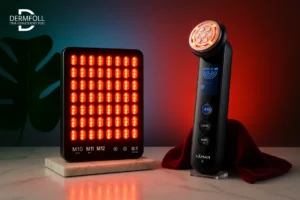


Derm Digest is Dermfoll’s deep-dive journal: a place where we unpack at home skincare devices the way dermatology papers do, not the way ads do. Instead of promises of “glass skin in 7 days,” you’ll find calm, detailed breakdowns of how these tools interact with real skin, on real faces, with real medical histories.
It’s designed for the in-between space: when you’re not sure whether to invest in an at-home device or book in-clinic skin tightening procedures, LED sessions or facials. Maybe you’re weighing a radiofrequency skin tightening wand against a clinic package, wondering if a microcurrent skincare device is worth it, or trying to decode those “blue red green light therapy” claims for acne and redness. Derm Digest sits with you in that decision-making moment and gives you context, not pressure.
Underneath everything is one simple principle: evidence, not hype. We lean on dermatology and aesthetic medicine journals, safety data, and user experience to figure out what’s genuinely helpful, and where a device might quietly be the wrong move for your skin.
Each Derm Digest article takes one category of at-home device and runs it through a skin-science filter. We look at how that technology works in theory, what studies show in practice, and what actually happens when people use it every day at home. If the research is strong, we explain what that means in plain language. If the data is thin or early, we say that too.
We pay close attention to where devices can backfire: melasma flares after radiofrequency skin tightening, increased redness with poorly timed led therapy for rosacea, barrier damage from over-using energy devices, or unexpected swelling when tools are used over fillers or threads. Our goal isn’t to scare you away from at home skincare devices, it’s to give you a clear view of the upside and the downside, so you’re not blindsided later.
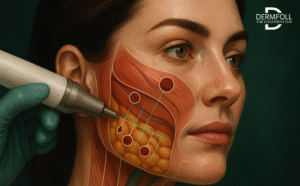
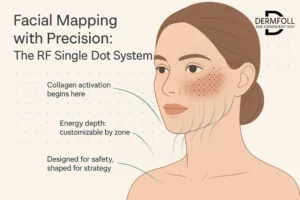
In the RF section, we tackle the whole spectrum of radiofrequency skin tightening tools aimed at firming, lifting and contouring. We break down how bipolar radiofrequency skin tightening focuses energy between two nearby electrodes, and how monopolar radiofrequency skin tightening can penetrate deeper and spread more widely. That difference matters when you’re thinking about jawlines, under-chin areas, or post-pregnancy abdominal skin.
We look at questions like: how much can home RF really do compared to in-clinic skin tightening procedures? How does heat affect collagen, fat pads, and the delicate skin around the eyes? What happens if you use RF over old filler, threads or scar tissue? And how does all this change if your skin is melasma-prone or sits in a deeper Fitzpatrick range?
You’ll find topics such as:
RF at home vs in-clinic: what you can realistically expect from each
RF after pregnancy or weight loss: tightening vs managing expectations
RF around fillers and previous cosmetic work: when to be cautious
RF and pigmentation risk in melasma and darker skin tones
Rather than telling you “buy this device”, these pieces help you decide whether RF is even the right category for your situation, and if it is, how to approach it more safely.
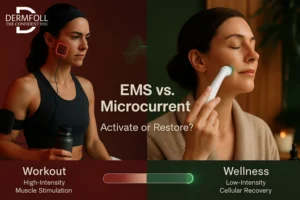
Our microcurrent section focuses on the muscles, nerves and subtle changes that a microcurrent skincare device may offer. We explain what’s happening when low-level electrical currents move through facial muscles, what people mean by “lifting” and “toning”, and why the “snatched” look on social media often depends more on lighting and angles than on a single gadget.
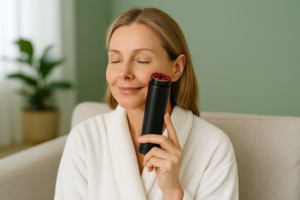
We also look at combination tools, like a microcurrent and red light therapy device, and how using both currents and light together might influence sensitivity, redness, or barrier health. If you’re already dealing with migraines, metal implants, nerve conditions or significant facial asymmetry, these articles help you understand where caution is wise.
Expect topics such as:
Microcurrent vs RF: firming vs muscle tone, and which to prioritise
Short-term “post-treatment glow” vs longer-term training effects
Microcurrent and facial symmetry: what’s realistic and what isn’t
How microcurrent interacts with medications, implants or nerve issues
We also talk about how microcurrent fits into a routine with actives: when to pause your strong acids or retinoids, how to avoid irritation, and how to space treatments so your skin isn’t overwhelmed by too many inputs at once.
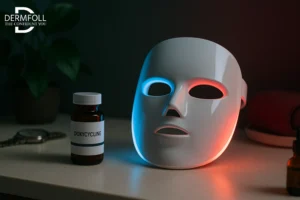
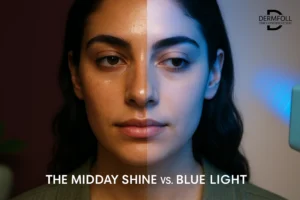
In the LED section, we dig into panels and masks offering red, blue and blue red green light therapy modes. We explain what different wavelengths are thought to do, red for inflammation and collagen support, blue for acne-causing bacteria, green often marketed for pigmentation or “brightening”, and where the science is stronger or weaker.
We pay special attention to led therapy for rosacea and other redness-prone conditions. Used thoughtfully, LED may help calm and support the barrier; used at the wrong intensity, duration or alongside triggering actives, it can sometimes make flushing worse. Derm Digest pieces help you think through timing, frequency, and how LED fits around your existing skincare and any in-clinic treatments.
Typical topics include:
Red vs blue vs mixed light: matching the mode to your main concern
LED for acne vs LED for redness, rosacea and sensitive skin
How to fit LED around retinoids, exfoliants and peels without overdoing it
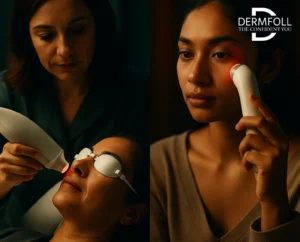
Eye safety, photosensitivity, and special considerations for deeper skin tones
Rather than treating LED as a miracle, we treat it as one tool in a bigger plan, and show you where that tool makes the most sense.
Think of Derm Digest as your calm research phase before you spend money or start a new routine. Instead of scrolling through reviews at 1 a.m., you come here first, read the overview for the device type you’re considering, and understand what that technology can actually do.
We recommend starting each article with the big-picture explainer, then jumping straight to the “who should avoid this” and “risks” sections. Those are the parts that matter most if you have melasma, rosacea, a fragile barrier, a history of scarring, deeper skin tones, or previous cosmetic procedures. Once you’ve seen the risk side, you can compare it with marketing promises and decide whether the trade-off feels worth it.
A simple way to use Derm Digest:
Check how that device type interacts with your specific concern (melasma, rosacea, barrier issues, fillers, pregnancy, medications, etc.)
Note any hard limits: skin types, conditions, or timeframes where you should skip a device entirely
Compare at-home options with in-clinic skin tightening procedures or treatments in terms of cost, time, maintenance and likely results
Take your notes, screenshots or questions to your dermatologist or provider before buying or using anything new
The goal isn’t to replace professional advice, it’s to help you walk into that appointment with better questions and a clearer sense of what you want from any at home skincare devices you’re considering.
Derm Digest can’t see your skin, examine your medical history or monitor how you respond over time. That means we can’t safely give individual medical advice, diagnose conditions, or tell you what to personally buy or use. Everything here is educational: a framework to help you think, not a prescription to follow blindly.
Before you start any energy-based device, RF, microcurrent, LED or any tool promising radiofrequency skin tightening or fast transformations, check in with a dermatologist, doctor or qualified aesthetic practitioner. This is especially important if you have existing conditions, a history of pigment changes, are on prescription treatments, have had recent in-clinic skin tightening procedures, or are prone to scarring or keloids.
Your skin isn’t a generic “before and after” photo. It’s a living organ with a history. Derm Digest exists to respect that history, give you clearer information, and help you make decisions that feel measured, not rushed.