






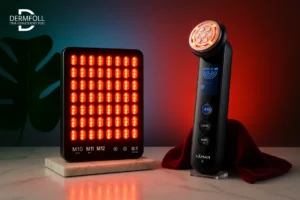


Derm Guide is your practical side of Dermfoll, the step by step skin care guide that shows you how to actually use at home skincare devices in real routines. Where Derm Digest focuses on the “why” and the science, Derm Guide turns that into simple, followable plans you can plug into your daily life.
Think of it as your calm, realistic skin care routine guide: no 20-step chaos, just clear instructions on what to do, when, and what to avoid.
Derm Guide is a hands-on guide to skin care built around devices you’re already curious about:
RF skin tightening tools
Microcurrent devices
LED masks (red, blue, or a mix of both)
Each guide walks you through where these fit in a routine, how often to use them, and what not to combine with them, like certain acids, peels, or heavy sun exposure right before or after a treatment.
We focus on:
Order of use: cleanse, treat, device, moisturise, SPF, where your device belongs in that flow
Frequency: how many times a week is realistic, not reckless
What to avoid: when to pause retinoids, exfoliants, in-clinic treatments, or other at home skincare devices so your barrier stays intact
Here you’ll find RF-focused plans that show you how often to use RF skin tightening tools, how to prep your skin (cleansing, drying, no metal jewellery on the area), and what to pair or avoid on treatment days. We’ll flag when to go gentle on retinoids, acids, and other actives so you’re not hitting your skin with heat and irritation at the same time.
Our microcurrent routines are all about consistency and realistic expectations. You’ll see weekly structures (for example, 3–5 short sessions instead of rare marathons), how to combine a microcurrent device with hydrating layers underneath, and what kind of “lift” you can expect over 4–6 weeks rather than overnight.
These guides help you structure LED sessions, how long to sit under red vs blue, how many times per week, and when to take breaks. We show how red light fits concerns like sensitivity and early ageing, and how blue light is usually positioned for breakouts. You’ll also see reminders on protecting your barrier, supporting pigment, and using LED alongside SPF, gentle cleansers, and barrier-friendly moisturisers.
Use Derm Guide as your starting framework before you experiment. Choose the routine that matches both your device type and your main concern, acne, redness, early ageing, mild laxity, or maintenance after in-clinic work.
Start slowly and treat every routine as something you’ll adjust, not a strict rulebook. Patch test products, listen to your skin, and pull back if you see irritation, unusual redness, or worsening pigment.
A few simple steps to follow:
Start with the lowest recommended frequency and intensity, then build up only if your skin is calm
Don’t introduce a new device and a new strong active at the same time, change one variable at once
Keep a quick log or photos and track your skin over 4–6 weeks, not 4 days
If something feels off (pain, heat, strong stinging, darkening pigment), stop and check in with a professional
These routines are general frameworks, not personalised medical advice. They’re designed to organise your thinking and give you structure, not to override what your own dermatologist or doctor recommends.
If you have active skin disease, a history of pigmentation issues, are pregnant or breastfeeding, use implanted medical devices (like pacemakers), or have complex medical history, always check with your doctor or derm before following any device-based routine.
Your skin is not “average”, and Derm Guide exists to support better conversations and safer choices, not to replace in-person care.