



What is TEWL and Why It Matters for Your Skin
Understanding TEWL and the Skin Barrier
If you’ve ever wondered why your skin feels dry, itchy, or just overly sensitive no matter how many serums you use, you might be dealing with something called TEWL.
Transepidermal Water Loss, or TEWL, is the process of water evaporating from your skin into the air. It’s something that happens all the time, and that’s completely normal.
But when the water loss gets too high, that’s often a sign that your skin barrier isn’t doing too well.
Now, your skin barrier, especially the outermost layer called the stratum corneum acts like a wall. The skin cells are the bricks, and the fats and lipids in between are the mortar.
When the mortar breaks down or becomes too thin, water starts slipping through the cracks. That’s when Tewl skin barrier function becomes a concern.
And the thing is, once this protective layer is compromised, your skin doesn’t just lose moisture, it also becomes more reactive.
You may notice redness, discomfort, or that certain products suddenly sting when they never did before. That’s your skin telling you something’s off.
What Causes High TEWL?
There’s no single culprit when it comes to high TEWL. in fact, a few everyday things could be playing a role.
environmental stressors: Cold weather, dry air, harsh wind, and even over-washing your face can all chip away at your barrier.
These elements make it harder for your skin to hold on to water, leading to that tight, uncomfortable feeling you might recognize in the winter months.
Then there’s aging. As we get older, our skin naturally produces fewer lipids, the good fats that help seal in moisture. With less of that lipid “glue,” the barrier weakens, and TEWL goes up.
Finally, chronic skin conditions like eczema, psoriasis, and rosacea tend to show up with already-damaged barriers. These aren’t just surface-level issues. They’re inflammatory conditions that can leave your skin more vulnerable and prone to elevated water loss.
When your skin is in this kind of fragile state, it’s important to be cautious when treating it, especially ones involving heat or energy. And yes, we’re talking about that radio frequency facial device you’ve been eyeing. We’ll get to that soon.
But for now, just remember: if your skin feels like it’s constantly dry, irritated, or unpredictable, there’s a good chance your Tewl skin barrier function is compromised. And before considering any advanced treatment, it’s worth giving your barrier the attention it deserves.
The Upside: How RF Supports Skin Barrier Function
How Radiofrequency Strengthens the Skin Over Time
Let’s be clear about something: RF treatments aren’t the villain here. In fact, when used at the right time, they can be incredibly helpful for your skin’s long-term health. The key is knowing when your skin is ready, and when it needs a little extra TLC first.
So, how does radiofrequency (RF) actually help your skin?
It all comes down to heat, but the good kind. A radio frequency facial gadget works by gradually heating the skin’s deeper layers. That warm energy activates a process known as collagen remodeling. Which is your skin’s natural way of tightening and firming itself from the inside out.
However, the benefits extend beyond simply smoothing out small wrinkles. This heat stimulation also improves circulation, allowing your skin to receive more oxygen and nutrients.
Over time, it may encourage your body to manufacture more lipids, which are necessary fats that keep your skin barrier healthy and hydrated.
And here’s how it relates to TEWL: when your collagen support, lipid production, and skin structure improve, your barrier improves its ability to retain water.
That means lower TEWL, and yes, fewer episodes of dryness and irritation if your skin is already in a healthy or healing state.
That’s the catch: while RF can reduce TEWL, it’s only effective in skin that’s not actively inflamed, broken, or compromised.
So if you’re dealing with an ongoing condition like eczema, psoriasis, or atopic dermatitis, this may not be the right time. We’ll unpack that more in the next section.
Who Can Benefit from RF Skin Tightening?
So, who exactly is a good candidate for RF?
If your skin is relatively balanced, free from flare-ups, and not showing signs of active inflammation, that’s a great start.
RF can be especially helpful for those noticing early signs of aging, mild laxity, or dullness that doesn’t seem to budge with skincare alone.
That said, it’s important to understand the difference between caution and contraindication.
Let’s say you have rosacea. That’s a trickier one. While it’s generally listed as a contraindication, some newer studies have explored very targeted RF treatments, under strict medical supervision.
So, it’s not a hard no across the board, but it’s definitely not a DIY moment either. If you’re considering RF with rosacea, it needs to be part of a dermatologist-approved plan.
But if you’re currently dealing with an active skin disease – like psoriasis or eczema in flare – RF is not recommended. In these cases, the risks outweigh the benefits, no matter how promising the technology sounds.
And remember, even if you’re not in a full-blown flare, skin with compromised Tewl skin barrier function still needs time to stabilize.
Jumping into heat-based therapy too soon could leave your skin worse off than before ,and no one wants that.
The downside – Why Barrier-Compromised Skin Reacts Poorly to RF
On a serious note, just because a treatment works beautifully for some doesn’t mean it’s right for everyone, especially right now. This is one of the most overlooked truths when it comes to radiofrequency skincare.
RF devices work by heating the deeper layers of your skin, creating a controlled wound that triggers repair and regeneration.
But what happens when your skin’s barrier, (its natural defense system) is already compromised? Well, instead of repairing, your skin may go into overdrive… and not in a good way.
In barrier-impaired skin, the heat from RF can:
- Worsen inflammation
- Heighten sensitivity to touch or temperature
- Slow down healing due to impaired lipid production and structural damage
This is especially true when TEWL is already elevated, a sign that your Tewl skin barrier function is struggling. In this state, RF isn’t just ineffective, it becomes a risk.
And that brings us to a crucial point: the importance of recognizing rf skin tightening risks before treatment, not after.
Skin Conditions To avoid RF
Certain skin conditions are inherently linked to a fragile or dysfunctional barrier. These are not just cosmetic concerns, they involve underlying inflammation, lipid disruption, and compromised healing.
All of which conflict with the mechanisms of radio frequency facial devices. Though Considering use of certain formylations can help better in some situations.
Below is a closer look at the key conditions where RF should be avoided, at least until your skin has returned to a healthier baseline.
Atopic Dermatitis (AD)
This chronic inflammatory skin condition is marked by intense dryness, itching, and a disrupted barrier.
In AD, lipid levels are depleted, the skin’s pH becomes more alkaline, and TEWL is significantly elevated, meaning water is escaping faster than the skin can retain it.
When RF energy is applied to this already vulnerable skin, it can trigger a cascade of proinflammatory signals. The heat may further elevate pH levels and activate enzymes like serine proteases.
Which break down proteins in the barrier, causing even more inflammation, discomfort, and a heightened risk of flare-ups.
In this state, even low-level RF can do more harm than good.
Psoriasis
Psoriatic skin isn’t just visibly inflamed, it’s compromised at a structural level.
Studies show higher TEWL even in areas that appear unaffected, indicating an across-the-board weakening of the skin barrier.
RF heat, while controlled, still acts as a form of microtrauma. And for someone with psoriasis, even minor trauma can trigger Koebnerization- the development of new lesions in response to injury.
So while the idea of tightening and rejuvenating sounds tempting, the rf skin tightening risks here include flare-ups, prolonged redness, and lesion spread.
Eczema and Xerosis
Skin with eczema or xerosis is typically dry, thin, and already fighting off chronic inflammation. The barrier is weakened, lipid content is low, and Tewl skin barrier function is poor.
Which means water evaporates quickly, leaving the skin irritated and exposed.
Introducing RF to this kind of skin, even at conservative settings, can intensify symptoms. The thermal energy may cause stinging, burning, or prolonged sensitivity.
In some cases, it could delay recovery from even minor trauma, making it a less-than-ideal choice for eczema-prone skin types.
Ichthyosis
Ichthyosis is a group of rare, usually genetic conditions that result in hyperkeratosis (thickened, scaly skin) and poor lipid delivery to the stratum corneum.
This results in a chronically leaky barrier and, often, persistent inflammation.
Because ichthyotic skin has such a unique structure. with altered hydration, lipid levels, and cell turnover, RF’s heat-based approach becomes unpredictable.
Variations in skin impedance can cause uneven heating, which may lead to discomfort or even burns.
Simply put, most radio frequency facial device protocols aren’t calibrated for skin with this level of baseline dysfunction.
Rosacea and Sensitive Skin
Rosacea is one of the more nuanced cases. It involves neurovascular hyperreactivity. Meaning your skin may flush, sting, or burn even without obvious irritation.
Sensitive skin types often share this reactivity due to compromised Tewl skin barrier function.
RF treatments, especially at standard rejuvenation settings, can overstimulate these delicate vessels. Increasing the risk of long-lasting erythema, swelling, or burning.
However, some clinical studies suggest that very low-energy RF, when administered under strict medical supervision, may be tolerated by select rosacea patients. This is very much the exception, not the rule.
So unless your provider specifically recommends it and customizes the settings accordingly, RF is best avoided in active rosacea or highly reactive skin.
If you’re dealing with any of the above or even suspect your skin may be in a compromised state, this is a moment to pause and reassess. It doesn’t mean RF is off the table forever. But timing matters.
How to Know If Your Skin is RF-Ready
Before jumping into any treatment that uses heat – especially something like a radio frequency facial device, it’s worth checking in with your skin first. Is it ready to handle the energy? Or does it need a little recovery time first?
Let’s walk through two key ways to tell.
Visual Signs of Barrier Dysfunction
You don’t always need high-tech equipment to know something’s off. Your skin often tells you, loudly, when it’s not in a good place.
Some signs are obvious, others a bit more subtle, but they all point to the same issue: a struggling skin barrier.
Here’s what to look for:
- Persistent redness that doesn’t fully go away
- Flaking or scaling, especially around sensitive zones like the nose, cheeks, or forehead
- Itching or a constant urge to touch or scratch
- Inflamed patches or bumps that flare up easily with skincare products
If you’re seeing these signs, it could mean that your Tewl skin barrier function is impaired, meaning your skin is losing water faster than it can replenish it.
And in that state, introducing heat (even gently) comes with rf skin tightening risks that just aren’t worth taking.
This is especially important for clients who have skin that “reacts to everything.” If moisturizers sting, masks burn, or weather shifts trigger irritation, that’s a red flag.
Your barrier may be thin, dry, and highly reactive, and not ideal for a procedure that relies on controlled injury and repair.
Diagnostic Tools: TEWL Testing & Skin Consultation
While your eyes and instincts are great, there are also more objective ways to measure your skin’s barrier health, if you want to go a step further.
One of the more advanced tools is called a Tewameter. It’s a non-invasive device used to measure Transepidermal Water Loss (TEWL) directly from your skin.
Elevated TEWL levels give a clear, quantifiable signal that your barrier isn’t functioning properly.
These are often used in clinical studies, but some advanced skincare clinics may offer TEWL readings during consults as part of a full barrier assessment.
Even without tech, a skilled skin consultation, guided by a trained aesthetician or dermatologist, can offer just as much insight.
During this, they’ll assess your skin’s texture, hydration, resilience, and response to light touch or pressure. They’ll also ask about your skin history, product tolerance, and sensitivity patterns.
This kind of screening is essential. Because rf skin tightening risks aren’t just about the device; they’re about how your skin is prepared to handle it.
Skipping this step could mean slower healing, less effective results, or worse, barrier damage that takes weeks to undo.
The Best Premium RF Devices for Skin Recovery After TEWL Repair
Once your skin has healed and your TEWL (Transepidermal Water Loss) is under control, you might be wondering, “Now what?” That’s when you can introduce premium RF devices for rebuilding and maintaining your skin’s newfound barrier health.
Let’s walk through the why, the when, and the which one – together.
Why Post-TEWL Repair Timing Matters for RF Technology
Here’s the thing: even the most advanced radiofrequency technology needs a healthy canvas.
If your skin barrier has just bounced back from dryness, irritation, or inflammation, giving it a bit more time before jumping into heat-based treatments is key.
Why? Because a stabilized barrier acts like a well-repaired wall. It keeps moisture in, blocks irritants out, and responds better to any kind of treatment – including RF.
Once TEWL levels are back in balance and your skin’s structure is more intact, radiofrequency devices can safely dive deeper. That means:
- Better collagen activation
- Less chance of sensitivity
- And way more visible results, long term
It’s like prepping the soil before planting – do the foundation work, and your skin will flourish.
“Skin with repaired TEWL responds significantly better to controlled thermal therapy, showing improved elasticity and hydration without post-inflammatory sensitivity.” — Journal of Dermatologic Therapy, 2022
So, when’s the right time? Once your skin feels consistently calm, isn’t reacting to products, and looks visibly hydrated – you’re likely in the clear. From there, RF can become your next-level tool.
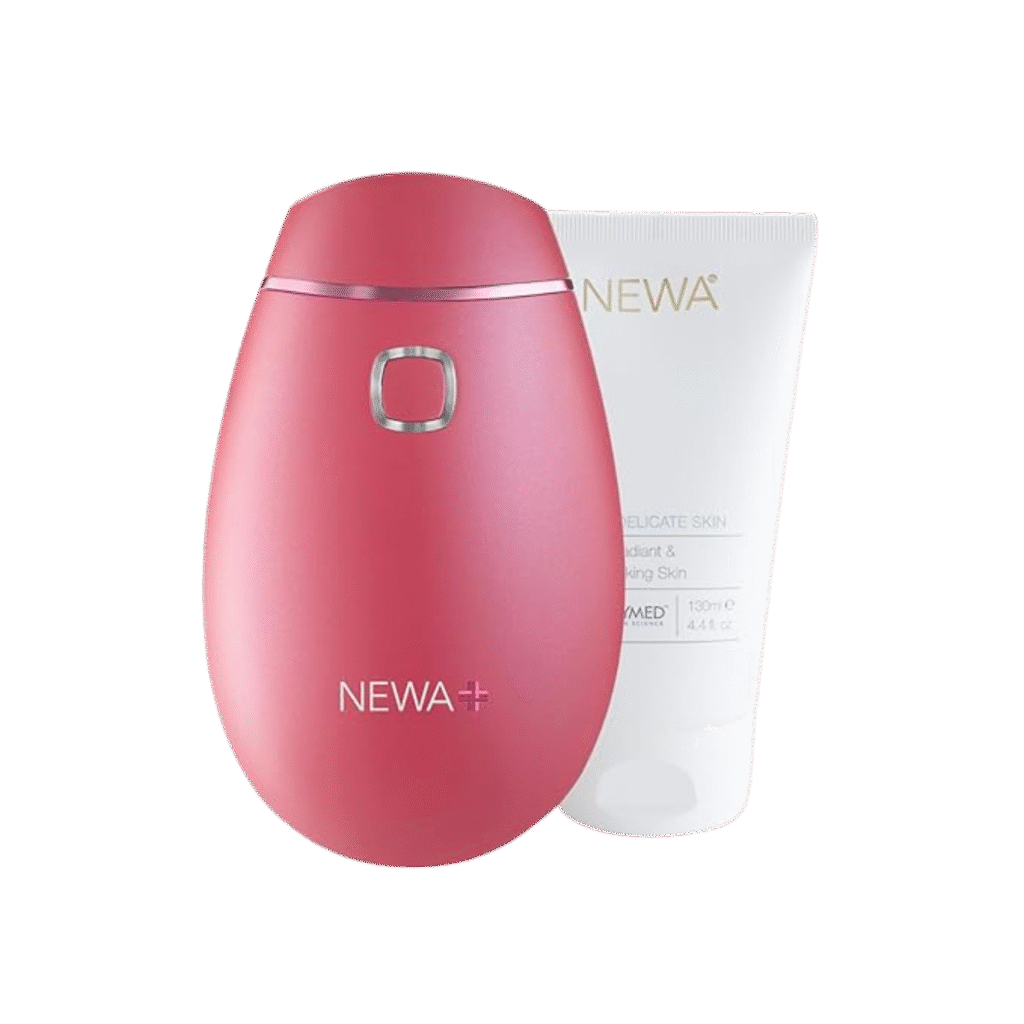
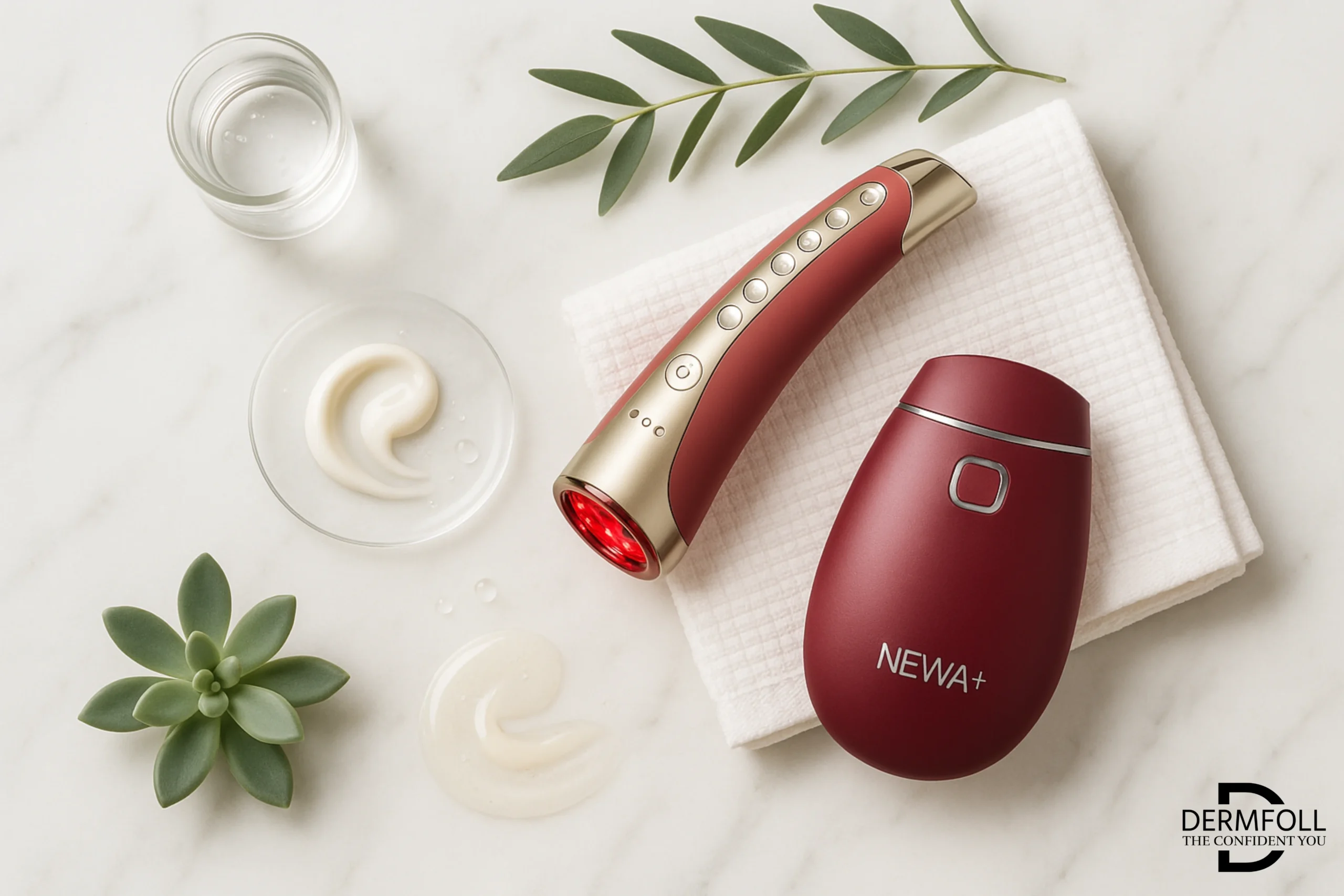
NEWA Classic Skin Care System – Gentle RF with Clinical Precision
If you’re easing back into skincare devices, the NEWA Classic Skin Care System could be your new favorite.
This isn’t a high-aggression, do-it-all-at-once tool. Instead, it’s a focused, bipolar RF device designed specifically for skin that’s past the inflamed stage – but still needs a thoughtful touch.
The technology heats the dermis (the middle layer of your skin) to just the right degree – enough to wake up your fibroblasts and nudge collagen production, but not enough to irritate.
Clinical trials have shown that users with previously dry, sensitive, or barrier-impaired skin saw:
- Increased skin firmness after four weeks
- Smoother contour lines, especially around the jaw and cheeks
- Minimal reactivity when used on a stabilized barrier
Pair this with your favorite barrier-reinforcing serum (think: ceramides or peptides) right after a session. And you’ve got a combo that hydrates and strengthens without pushing your skin past its limit.
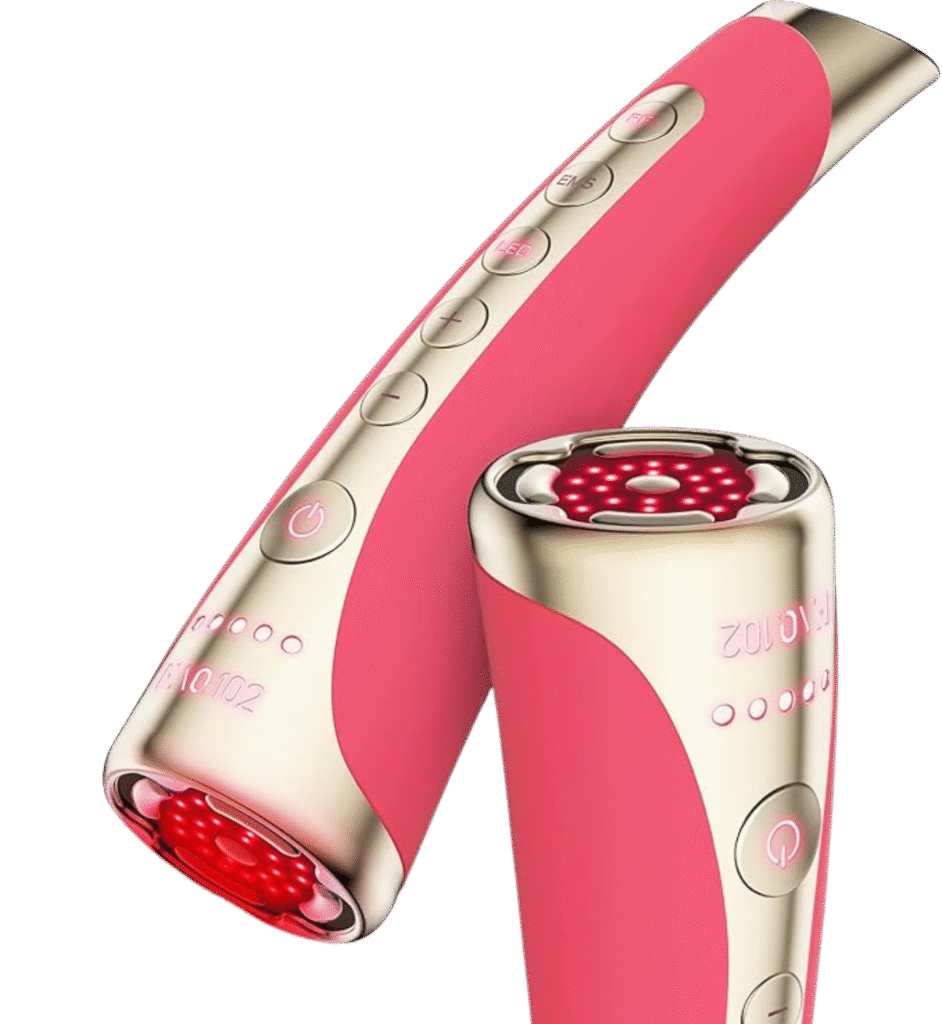
FAQ 102 : Multi-Tech Innovation for Long-Term Dermal Remodeling
If you’ve made it through the barrier-repair phase and your skin’s feeling strong again – hydrated, calm, and no longer flaring up – FAQ 102 might be your next step up in RF care.
What makes it different? Well, this device doesn’t rely on just one technology.
It brings together advanced RF with T-Sonic pulsation, giving you a layered approach to skin rejuvenation without feeling harsh or overwhelming.
That means:
- Deeper dermal stimulation
- Gentle surface-level vibration to boost circulation
- Better elasticity over time, with less risk of over-treating
This makes the FAQ 102 especially great for mature skin that has regained its balance. If you’re noticing fine lines, sagging, or your skin just isn’t bouncing back like it used to – but it’s no longer dry or fragile – this one’s for you.
It’s designed for users who want long-term results and are ready to stay consistent without stressing their skin. Think of it as a gentle, but determined trainer for your dermis.
“Dual-stimulus RF and sonic pulses enhance fibroblast regeneration and blood flow, promoting elasticity in barrier-recovered skin.” — Clinical Aesthetic Devices, 2023
Still wondering which device fits best? Let’s break it down together.
Comparison Guide: NEWA vs. FAQ 102 for Post-Barrier Skin
Choosing between the NEWA Classic Skin Care System and the FAQ 102 comes down to your skin goals and where you are in your recovery journey. Here’s a quick side-by-side to help guide your decision:
| Feature | NEWA Classic Skin Care System | FAQ 102 |
|---|---|---|
| Technology | Bipolar RF | Mono RF + T-Sonic Pulsation |
| Best For | Sensitive, recently recovered skin | Mature, balanced skin |
| Heat Intensity | Gentle, fixed range | Adjustable via modes |
| Application Zones | Lower face, cheeks, jawline | Full face + precise areas |
| Topical Pairing | Works best with ceramides/peptides | Great with firming serums |
| Routine Fit | 4–5x/week short sessions | 2–3x/week longer sessions |
So, how do you choose?
- Go with NEWA if your skin is still finding its rhythm, and you need controlled precision.
- Pick FAQ 102 if your barrier’s healed and you’re ready for a slightly deeper, more comprehensive lift.
Just remember – no matter which you choose, pairing it with low-friction topicals and sticking to a gentle, hydrating routine can amplify your results.
Conclusion: Restore First, Rejuvenate Wisely
RF treatments can do amazing things, boost collagen, tighten skin, and even support barrier health. But none of that matters if your skin isn’t ready.
If you’re dealing with eczema, psoriasis, rosacea, or dryness from high TEWL, jumping into heat-based devices too soon can backfire. Your skin needs time to recover before it can truly benefit.
Once your barrier is stable, that’s your window. This is where tools like the NEWA Classic Skin Care System and FAQ 102 shine.
NEWA delivers clinical-grade RF for sensitive skin, while FAQ 102 adds smart pulsation to stimulate without stressing your barrier.
So don’t rush it. Let your skin heal first, then pick the right device to rebuild from the inside out.
✨ Your glow depends on smart timing, not just smart tech.